Two shades, different moods
Blue vs. gray colored contacts
Both color families can create a cool-toned look, but neither has a single finish. Compare the actual lens pattern, your natural eye color and the makeup you plan to wear before choosing between them.
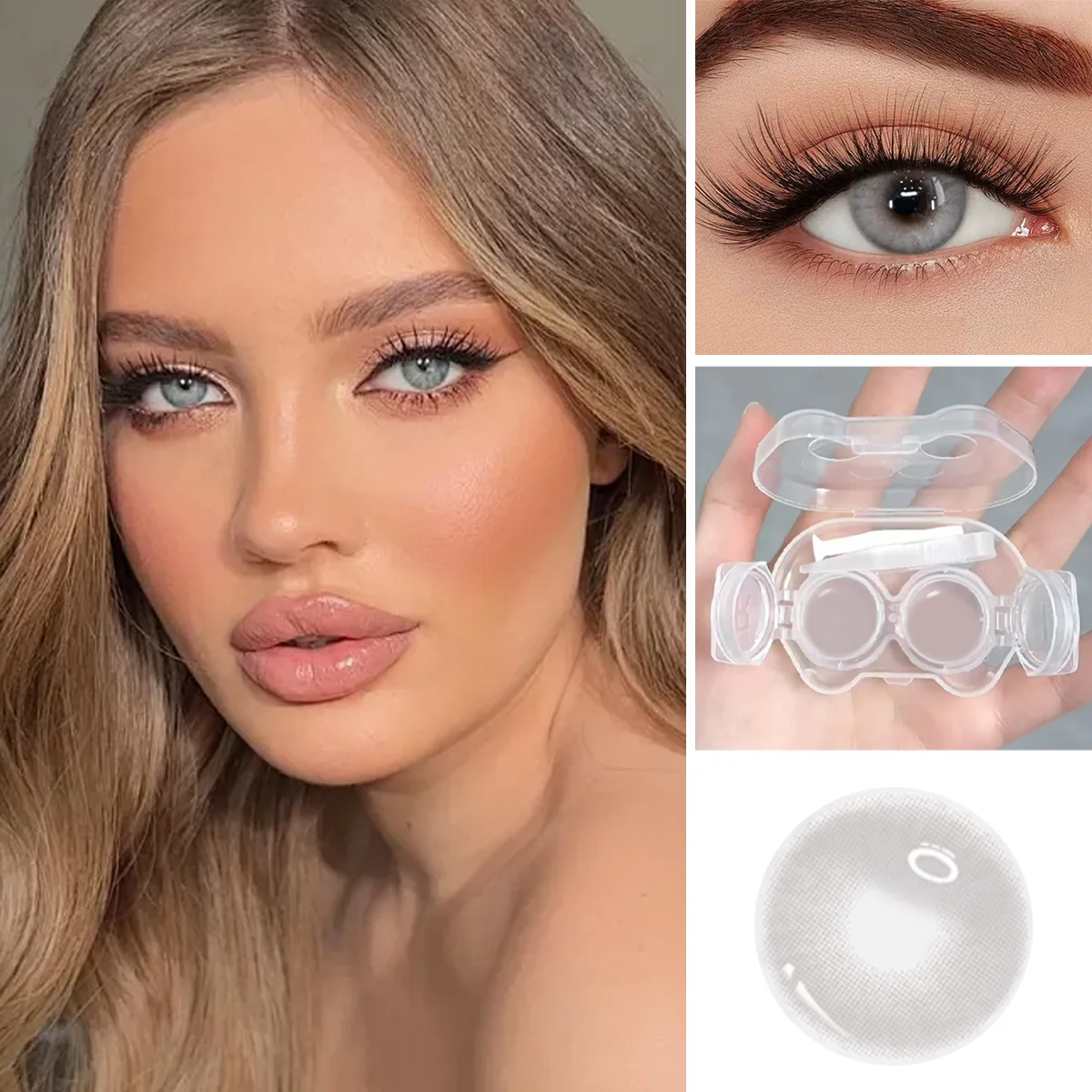
Compare undertone before intensity
Blue lenses may lean icy, aqua or deeper ocean blue. Gray lenses may appear silver, smoky or mixed with blue or green. These descriptions suggest a color direction; they do not promise how a lens will appear on your eye. Start with two products that have the undertones you like, then compare their patterns.
For example, you can view Arctic Mist Blue alongside Crystal Fog Gray. Use their separate product photos to compare color and printed detail. They are different products, so the photos are not a controlled before-and-after comparison on the same eye.
Look at contrast and the outer ring
A pale gray with a defined outer ring can be more noticeable than a muted blue with a blended edge. Likewise, a bright blue center may create a stronger contrast with your iris than a darker gray. This is why choosing “gray for subtle” or “blue for bold” is too broad.
Look at the lens close-up as well as the on-eye view. Compare the density of the printed area, the transition toward the center and the definition at the edge. If the available photos do not show an important detail, ask for more product information before deciding.
Consider your natural eye color
On a dark brown iris, the visible effect depends on the particular lens pattern and the natural color showing through it. On a lighter iris, a cool lens may blend differently. Neither family guarantees the same coverage across products or wearers.
Our dark-eye color guide offers more context. Whenever possible, compare photos that identify the wearer's natural eye color and use similar lighting. Avoid treating a heavily edited social image as evidence of a guaranteed effect.
Pair the shade with your makeup
For a cooler makeup palette, compare both families beside the eyeliner, shadow and lip colors you usually wear. A blue lens can become the focal point of a neutral look, while a smoky gray can echo charcoal liner. Either family can also create contrast with warm browns and bronze tones.
If you are planning cosplay, compare the entire character palette rather than choosing by iris color alone. Lighting on a stage or in a photo setup can change the balance. Explore the cosplay collection for more options, and remember that color choice does not determine fit or wearing time.
Choose the product, then confirm suitability
Shortlist a blue and a gray product, compare their photos and specifications, and confirm prescription and fit with your eye-care professional. Follow the manufacturer's wearing and replacement instructions; “daily makeup” describes a style, not a daily-disposable schedule.
Read how to choose colored contacts for the full selection checklist and lens care basics before wearing. If your eyes feel uncomfortable, remove the lenses and seek professional advice.
Quick Answers
- Are gray contacts always more subtle than blue contacts?
No. Printed pattern, contrast, opacity, your natural iris and lighting influence how noticeable a lens looks. Compare specific products rather than relying only on the color family. - Why do blue contacts sometimes look gray in photos?
Lighting, camera white balance, screen settings and the natural iris can affect the appearance of a cool-toned lens. Compare available product images in different lighting rather than expecting an exact match.