The color notebook
How to choose colored contacts
Start with the look you want, then compare the details that shape it. A shade name is a useful starting point, but the lens pattern, your natural eye color and the light around you all influence the finished look.
1. Start with fit and specifications
Color comes after suitability. Contact lenses are medical devices, including cosmetic lenses without vision correction. Ask an eye-care professional to confirm your prescription, fit and the lens specifications that apply to you. A model name or diameter in a listing is not enough to establish fit, and a lens that looks similar to another model may have different specifications.
Before ordering, compare the manufacturer's instructions with the product listing. If a specification is missing or unclear, ask for the information rather than inferring it from a photo. Do not use a color guide as a substitute for professional fitting advice.
2. Decide between subtle and expressive color
For a natural-inspired makeup look, start by comparing nearby tones: brown, hazel, muted green or soft gray. Look at how the printed pattern blends at the center and how strongly the outer ring is defined. A bold outer edge can make a shade appear more graphic, even when its base color is close to your own.
For a character or costume look, begin with the color palette of your makeup, wig and outfit. Compare stronger contrasts in the cosplay contact collection. For softer styling, explore natural colored contacts. These are visual groupings, not descriptions of wearing schedules.
3. Compare color with your natural iris
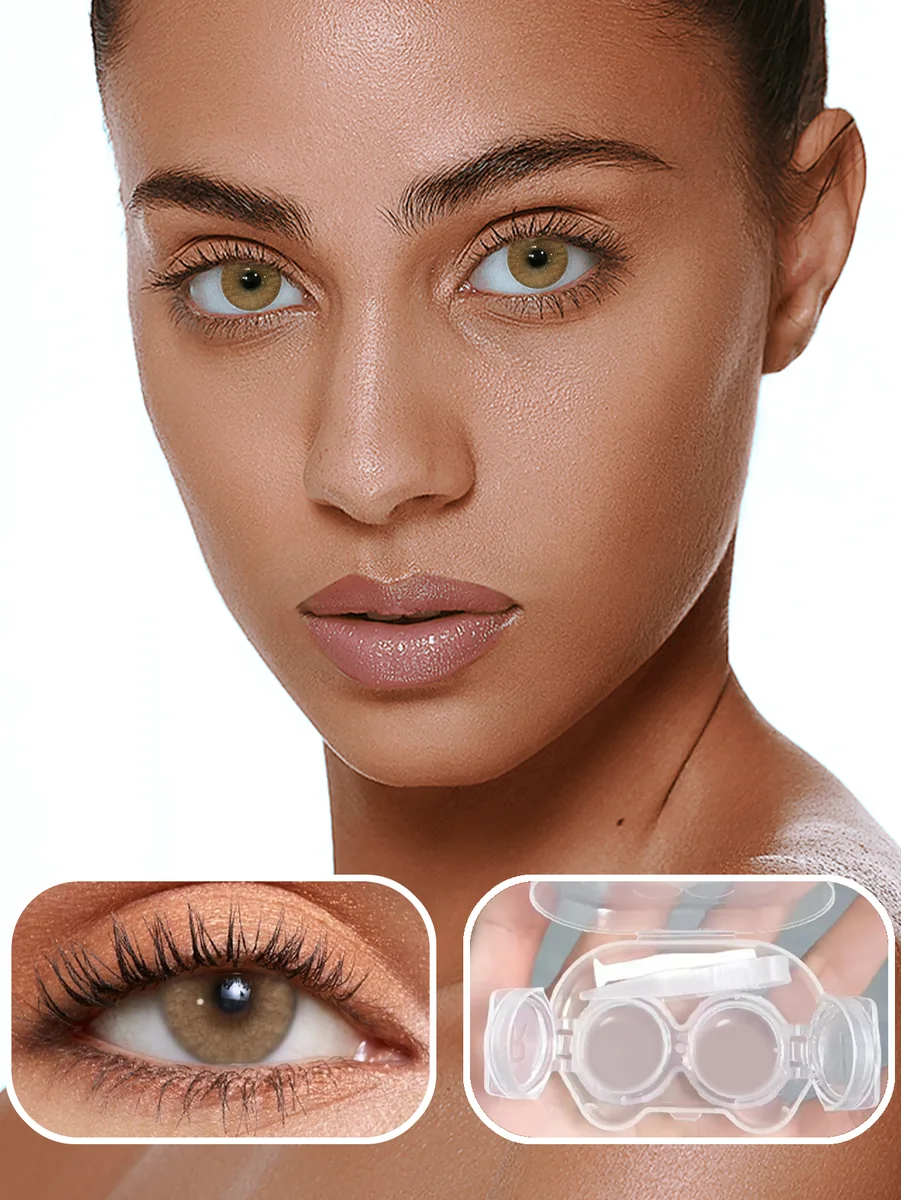
The same lens can appear different on light and dark irises. Your natural color can remain visible through parts of the pattern, including the pupil opening. Compare on-eye photos with lens close-ups so you can distinguish the printed color from the eye underneath.
If you have dark brown eyes, look for photos that identify the model's natural eye color when available. Read our guide to colored contacts for dark eyes for comparison tips. No shade name alone guarantees coverage or a particular result.
4. Check the light, pattern and whole look
Daylight, warm indoor light and flash can each change how a color reads. Compare multiple views when available and be cautious about using a filtered social video as your only reference. Screen brightness and camera processing can also make a lens seem lighter or more saturated.
Think about your whole makeup look rather than just an isolated iris. A cool blue may read differently beside warm eyeshadow than beside silver or gray. Our blue vs. gray contact comparison explains how to compare two cool-toned families without assuming one will look the same on everyone.
5. Keep a short selection checklist
- Confirm prescription, fit and manufacturer specifications with your eye-care professional.
- Choose a subtle or expressive direction, then compare two or three shades.
- Look at the lens pattern, outer ring and on-eye images together.
- Check what is included and read the shipping and return terms before checkout.
- Read the supplied instructions and lens care basics before handling your lenses.
Every gazechic pair includes a lens case. A case does not replace appropriate solution or the manufacturer's care instructions. Never share contact lenses or use water to clean or store them.
Quick Answers
- Should I choose colored contacts by color alone?
No. Compare the lens pattern and product specifications as well as the shade. Your eye-care professional should confirm fit and prescription; a product photo cannot establish either. - Will colored contacts look exactly like the product photo?
Not necessarily. Natural iris color, the lens pattern, lighting, camera settings and screen settings can change the appearance. Treat photos as a comparison aid rather than a guaranteed result.