Warm-shade comparison
Hazel vs. brown contacts
Start with the amount of contrast you want. Hazel and brown are useful shopping labels, but two lenses in the same color family can have different patterns and very different visual effects. Comparing individual products is more useful than choosing by the color word alone.
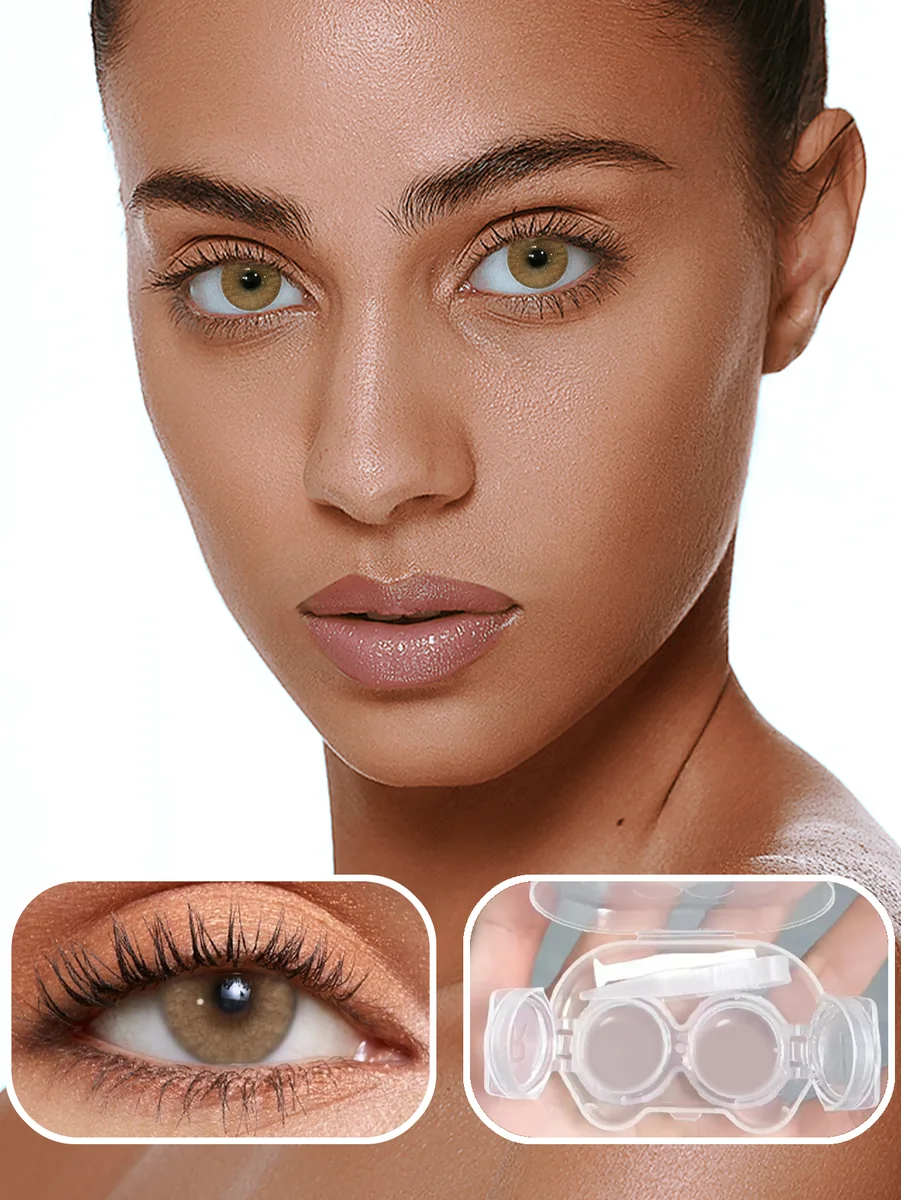
Compare tone, pattern and edge definition
Hazel names often describe a mixture of brown, gold or green directions; brown names emphasize a brown family. There is no universal color formula behind these labels. Look at where the light and dark areas sit in the actual lens pattern, especially around the outer edge and the pupil opening.
A stronger outer ring may create more visible definition. A lower-contrast pattern may create a softer transition in a photograph. Neither observation tells you whether a lens fits, how comfortable it will be or how long it can be worn.
Build a shortlist from real products
- Olive Sand Hazel — compare the Sahara Hazel 14.2mm model and its warm-shade product photos.
- Honey Dew Hazel — compare the Honey Dew 14.2mm model beside your first hazel choice.
- Silky Taupe Brown — use the Taupe Silk 14.2mm product as a brown-family comparison.
- Coffee Ring Brown — compare the Coffee Ring 14.0mm listing and its pattern details.
Listed model diameters are product information, not a way to determine your own fit. Check the complete package specifications with your eye-care professional.
Check the same lighting before deciding
Compare photos against similar backgrounds and at a similar scale. A close-up iris crop under bright light can look very different from a whole-face image in a warm room. Your natural eye color also contributes to the result, so avoid treating someone else's photograph as a guaranteed preview.
If you want a quieter makeup combination, compare a warm lens with your usual neutral shadows and liner. For a more defined look, compare the outer-ring contrast rather than assuming every hazel is bold or every brown is subtle. Our lighting comparison guide explains what can change between photographs.
Choose the shade, then confirm the specifications
Keep one hazel and one brown on your shortlist, compare their individual photos, and confirm suitability before ordering. Every gazechic pair includes a clear case. Follow the manufacturer's care and replacement instructions; a style described as everyday makeup does not establish a daily-disposable schedule.
Use the colored contact selection checklist for the next steps, or return to natural-inspired colored contacts to compare more color families.
Quick Answers
- What is the difference between hazel and brown contacts?
Hazel names often suggest a mix of brown, gold or green tones, while brown names emphasize a brown color family. These names are not standardized color specifications. Compare the individual lens photos, pattern and listed specifications. - Will hazel contacts look lighter than brown contacts on my eyes?
Not necessarily. The printed pattern, your natural iris, lighting and camera exposure all influence the result. A shade name or product photo cannot guarantee how light a lens will look on you.