Lens pattern notebook
Limbal ring colored contacts: compare the edge
A shade name tells only part of the story. The border around a colored contact pattern can make two blue, gray or brown designs look quite different. Start by comparing the edge in a lens close-up, then look at the whole face.
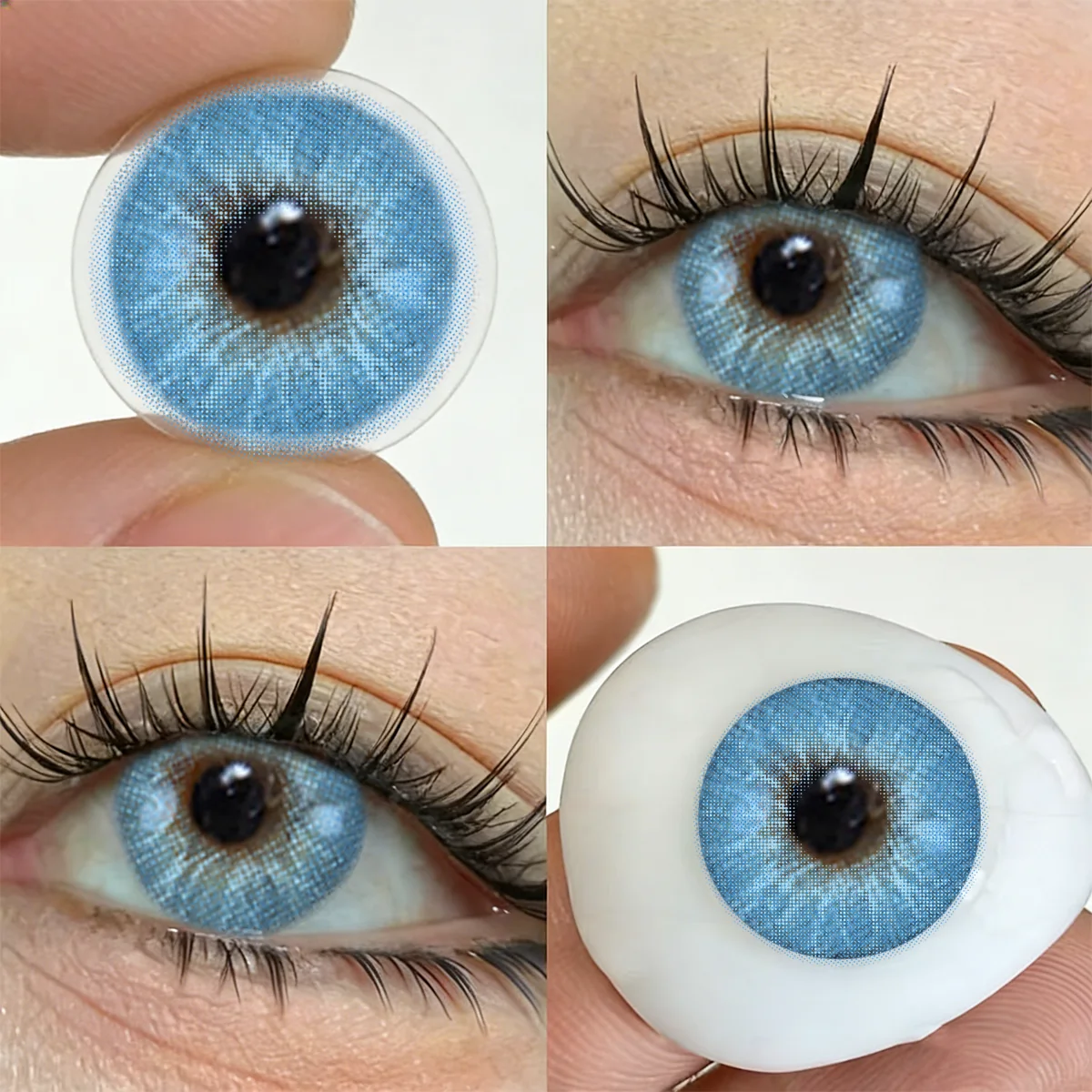
What the term describes
Colored contact listings often use “limbal ring” for a darker printed border surrounding the colored pattern. Some borders look like a distinct circle; others break into dots, fine strokes or a gradual transition. These are visual descriptions, not standardized measurements of a lens.
A product name containing “ring” is not enough to establish the width, density or graphic diameter of that border. Inspect the actual product image and look for manufacturer information if a particular specification matters to your choice.
Compare defined and blended edges at the same scale
Choose two images with similar crops. A close-up can make a border seem much stronger than it appears in a whole-face photograph. Look at the transition from the printed edge toward the center, the spacing of the pattern and how much natural iris remains visible.
For a starting comparison, view Ice Ring Blue and Arctic Mist Blue. They are separate designs, and their photos are not a controlled test on the same wearer. Compare what is visible rather than assuming their names guarantee a particular effect.
Separate visual definition from size and fit
A darker outline can change the impression of contrast in an image. That does not mean the lens changes the physical size of the eye, and it does not prove that a lens has a larger printed area. Overall lens diameter and graphic diameter describe different things; one cannot be calculated from a product photograph.
Prescription and professional fitting still apply to cosmetic contacts in the US. A ring design, color family or diameter label cannot establish whether a lens is suitable for your eyes. Follow the manufacturer's instructions and your eye-care professional's guidance.
A short comparison checklist
- Compare the outer border in a clear lens close-up.
- Check an on-eye view and a whole-face view when available.
- Use similar lighting and image scale rather than a filtered social clip alone.
- Confirm any missing manufacturer specifications before ordering.
For more context, read our dark-eye comparison guide and guide to lighting in product photos. A softer-looking pattern is a styling preference, not evidence of greater comfort or safety.
Quick Answers
- What is a limbal ring on colored contacts?
In product descriptions, a limbal ring usually means a darker printed border around the colored lens pattern. Compare the actual lens close-up to see whether the edge is sharply defined, blended or irregular. - Does a darker ring mean a lens will make my eyes look bigger?
A darker edge may create a visual impression of definition, but the effect depends on the printed pattern, your iris, lighting and image scale. It does not establish a larger graphic diameter, a physical change to the eye or a suitable fit.
Sources and further reading
Official references for prescription, fitting or care information. Color comparisons are editorial guidance, not clinical advice or product wear tests.